|
Antiques,
Collectibles, Vintage Shopping
|
|
|
|
Collector
Books, Reviews, Education
|
|
|
|
Online
Museums & Directories
|
|
|
|
Discover
Collectics Variety
|
|
|
|
Cool
Stuff
|
|
|
|
|
|
|
|
|
Vintage
Sunglasses Shop - Authentic
vintage Revo, Ray-Ban, Armani,
Carrera, Alpina, Cazal, Persol, Vuarnet,
Bolle, Oliver Peoples, and French
cat's eye sunglasses!
|
|
|
|
Collectics
Antique & Vintage Sale
Coupon: Save 10% On Entire Order!
|
|
|
The Collectics
Antiques Information & Education pages are
designed to further knowledge of antiques, collectibles,
collecting styles, periods, artists, designers,
and manufacturers of fine and decorative arts.
To learn more, our Antique
Collector Bookstore lists only the best
collector books and price guides, complied by
surveys of top antique dealers and auction houses.
For a different shopping experience, you can
also browse our featured selections in a fun
new way with the Antique
Price Guides Slideshow or see current Amazon.com
bestsellers by using Collector
Books Topic Search.
|
| "prices 30% below your local antique shop or vintage store plus free shipping." Collectibles Guide 2010 |
| Peanuts
© United Feature Syndicate, Inc.
|
|
|
|
|
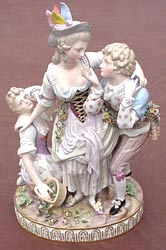
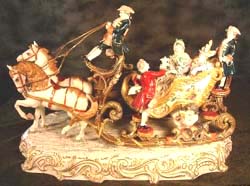
MEISSEN
PORCELAIN INFORMATION & HISTORY
|
|
|
Collectics
Customer Appreciation Sale
Coupon: Save 10% On Entire Order!
|
|
| The Elbe river
north of Dresden is the setting for Meissen, Germany. Meissen is more than
1000 years old, founded by King Henry I in 929 AD with the castle "Misni".
Meissen is really a fortress town, and several 13th and 14th century Gothic
cathedrals domintate the skyline of the town, along with the Albrechtsburg
Castle which stands at the original site of the Meissen Porcelain Works.
From the earliest days of the China trade, Chinese porcelain had been highly
valued by Europeans, and the expansion of trade in the 17th and 18th centuries
brought a greater supply and greater exposure for Chinese porcelain in
Europe. Europeans, however, were also trying to perfect the technique of
making their own hard paste porcelain. Italian and French craftsmen had
replicated porcelain only by creating a soft paste porcelain of white clay
and ground glass, not the white kaolin clay used by the Chinese.
Meanwhile, Augustus
II (1670-1733) of Saxony, known as Augustus the Strong, became
a patron of the decorative arts and particularly admired fine
Chinese porcelain. He was an avid collector, but he also funded
the research and development to create a local porcelain industry,
setting up his ceramic works in Meissen. One of his chemists,
Johann Bottger, discovered the proper Chinese formula for hard
paste porcelain in 1708 while having been mandated by Augustus
the Strong, now the King of Poland, to discover a way to produce
gold. In 1710, the necessary ingredient of kaolin clay to make
hard paste porcelain was discovered within his territory and
used at his new factory in Meissen. The local geography of surrounding
mountains could be used to protect the factory and the secrets
of porcelain manufacture, and the Elbe river provided ready
and inexpensive transportation for raw materials and finished
product. The Staatliche Porzellan-Manufaktur Meissen as it was
known began production in a broad array of shapes, colors and
decoration, and in 1719 Augustus brought to the factory top
painters and sculptures to create revolutionary new designs
and colors for the company. Meissen was unchallenged for supremacy
until the mid 1750s by the French royal factory at Sevres,
France. The town of Meissen was renamed in 1776 to be Albrechtsburg
after the castle. In 1861, the factory was moved piece by piece
to a new site in the Triebischtal where it still stands today.
Meissen's trademark of crossed swords, derived from Augustus'
coat of arms, is known the world over as a mark of the finest
quality and a great history. The swords are painted on the porcelain
body after the first firing but before the application of glaze,
using a special color of cobalt blue and was first adopted in
1724.
Ever been fooled by
a fake or a seller that didn't deliver the goods as described?
At Collectics, we authenticate and stand behind everything we sell, at
prices "30% below your local antique shop" according
to Collectibles Guide 2010. Please browse our main Antiques
& Collectibles Mall to find a treat for yourself or
a great gift for others, all with free shipping. Thanks for visiting and shopping at Collectics!
Buy
finer ceramics on the Collectics Fine Antiques, Porcelain &
China, and
Pottery
pages, or use our convenient Search
Engine!
Sell
or consign period Meissen, Sevres, Goldscheider, and Staffordshire porcelain
& china at Collectics, where we earn our customers' trust everyday!
Read about our top performing national consignment program for estate and personal collections. |
|
|
Cool
Coupons & Promo Coupon Codes for Disney, Brookstone,
Avon, Netflix, eBags, and more @ our Coupon
Site!
|
|
|
|
|
|
Amazon.com:
Earth's Biggest Store!
|
|
|
|
Collector Book Purchases & Advertising Support Our
Free Online Museums, Antiques & Collectibles Information,
and Directories - Thank You! |
|
|
|
|
|
|
|
Display
Cases for collectibles, figurines, diecast
cars, sports memorabilia, dolls, and more!
|
|
|
|
Copyright
© Collectics. All rights reserved.
|
|