|
Antiques,
Collectibles, Vintage Shopping
|
|
|
|
Collector
Books, Reviews, Education
|
|
|
|
Online
Museums & Directories
|
|
|
|
Discover
Collectics Variety
|
|
|
|
|
|
|
|
|
Vintage
Sunglasses Shop - Authentic
vintage Revo, Ray-Ban, Armani,
Carrera, Alpina, Cazal, Persol, Vuarnet,
Bolle, Oliver Peoples, and French
cat's eye sunglasses!
|
|
|
|
Collectics
Antique & Vintage Sale
Coupon: Save 10% On Entire
Order!
|
|
|
|
Thanks
to the top antique dealers and private collectors
who allow us to feature their collections in
our online museum gallery, featuring the Art
Nouveau, Art Deco, and Arts & Crafts design
periods of the early 20th century. Among others,
we feature the work of Louis Comfort Tiffany,
Handel, Pairpoint, Galle, Loetz, Lalique, Demetre
Chiparus, Bruno Zach, Frankart, Stickley, Roycroft,
Rookwood, Newcomb, Grueby, and Turn Teplitz
Amphora. These pieces are not for sale and are
displayed here along with reference information
to be fun and educational. Continue learning
about finer antiques and collectibles on the
Collectics Antiques
Information & Education program pages,
and find the best collector reference books
and antique price guides in the Antique
Collector Bookstore.
Find
out why Collectibles Guide 2010 calls
Collectics the "best online shopping for antiques
and collectibles with prices 30% less than your
local antique shop or thrift store." Explore
our eclectic selection of antique and vintage
pottery, porcelain, glass, memorabilia, bakelite
& lucite, vintage jewelry and accessories,
and more in our main Antique
& Vintage Shop and Mall.
Can't
decide what to buy or need a great gift? Collectics
Gift
Certificates let your recipient select something
they really want from our extensive selection
of antiques, collectibles, and the best antique,
vintage, and retro jewelry and home furnishings
for sale online- all with free shipping! Thanks
for visiting and shopping at Collectics!
|
| Explore
the Antiques & Collectibles Mall |
|
|
|
Photo
click to enlarge
|
Art
Deco, Art Nouveau, and Arts & Crafts Design Museum 1890-1935:
Gallery
1
|
Museum Pages:
Gallery 1, Gallery
2, Gallery
3, Gallery
4, Gallery
5
Related Bookstore
Pages: Tiffany
Studios, Lamps
& Lighting, Art
Deco/ Nouveau/ Arts & Crafts, American
Pottery, Pottery,
Glass
& Crystal, Porcelain
& China,
Silver
& Metalware
|
|
Collectics Antique & Vintage Coupon
Code: Save 10% On Entire Order!
|
|
Save
& Learn!
|
Schiffer:
The Antique Collector Books & Price Guides Dealers
Use!
|
|
photo
3
photo
4
photo
5
photo
6
photo
7
photo
8 |
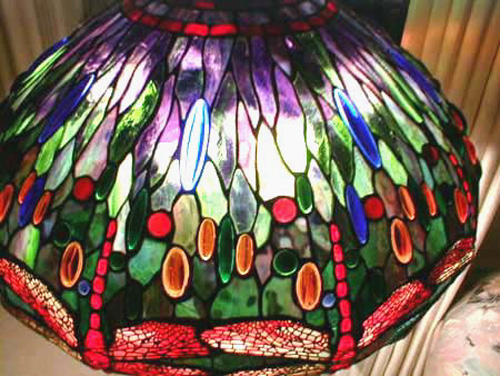
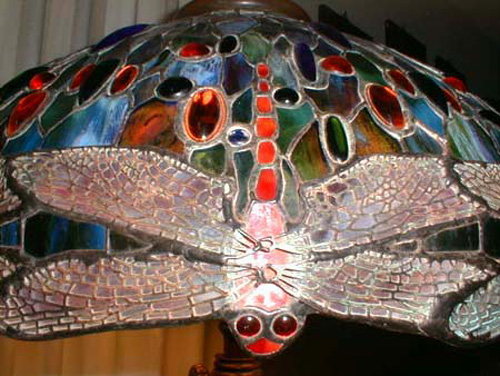
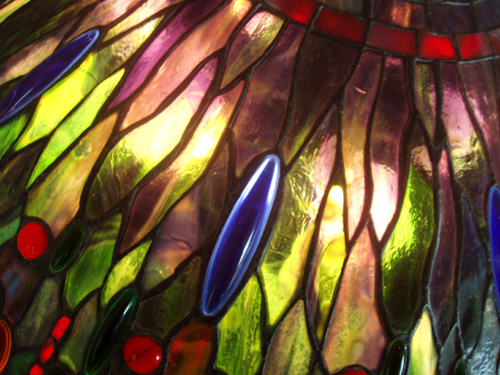
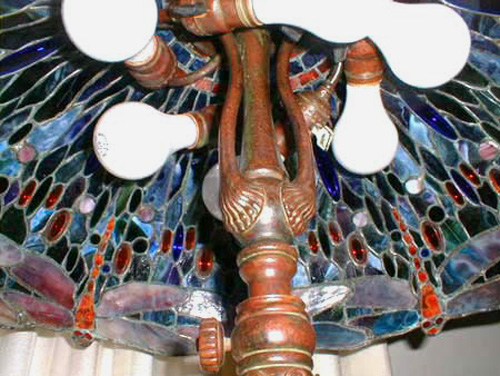
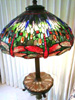
A 22" Tiffany
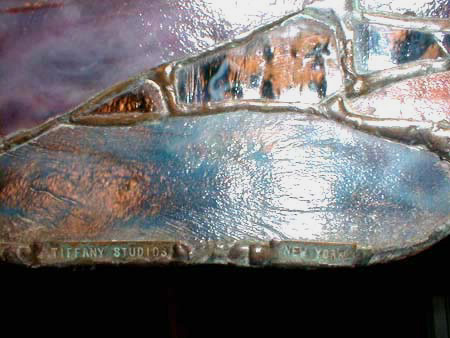
Studios "drop head" Dragonfly lamp shade signed Tiffany Studios
New York 1507 and produced c. 1905. This is a magnificent lamp,
one of about 12 1507s known to exist in the world. The shade incorporates
purple striated glass shading into green striated glass. The dragonfly
bodies are rendered in a red-orange mottled glass with wings in
a red and white striated glass with blue tints. Included in the
body of the lamp are elongated oval, medium and small oval, and
large/medium/small round jewels in colors of blue, green, amber,
and light blue. This variety of Tiffany jewels in the 1507 shade
includes the red pressed glass dragonfly eyes. The metalwork of
the lamp shade has a lovely, original red-brown and green patina.
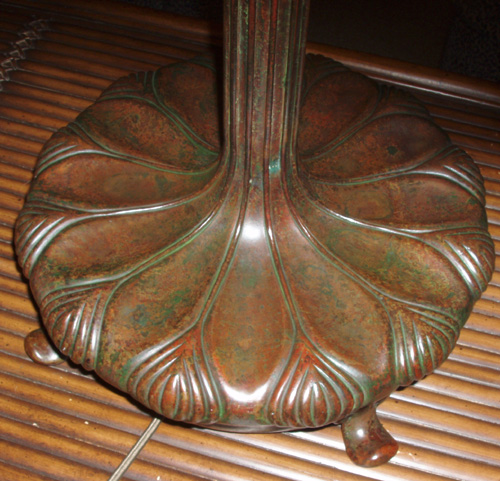
The shade sits on a large adjustable Tiffany Studios bronze "Library"
lamp base, signed Tiffany Studios New York 21465. A real Tiffany
lamp looks old and the shade often rattles a bit, with
obvious age to the leading and of course to the patina. When you
look at the dragonfly's eyes direct on, you can see two small
pins of light where the prism effect is perfect and it captures
the light in that manner. Tiffany lamps were made to preset patterns
in a repetitive assembly line process, albeit one completely hand
done. Darker colors of blues, reds, and purples are the most desirable
to Tiffany collectors. In the original 1906 Tiffany price list,
the 1507 shade alone cost $175! Reference
Source: Lamps
of Tiffany by
Egon Neustadt |

Lamps
of Tiffany
 |
  |
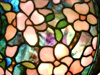
Rare Loetz
Leonida vase in mint condition, with polished pontil and with
a seldom seen authentic Loetz Austria signature. This vase is
highly iridescent with multicolored, unusual in both shape and
color as was the best of Loetz production. Loetz patented a
technique to produce the deep blue or gold metallic luster for
which the company is best known, and it is still the most identifiable
and most sought-after feature of Loetz glass. Reference
Source: Loetz:
Bohemian Glass 1880-1940 by
Johann Lotz Witwe, Helmut Ricke, Jan Mergl
|

Loetz:
Bohemian Glass 1880-1940 |
photo
3
photo
4
photo
5 |
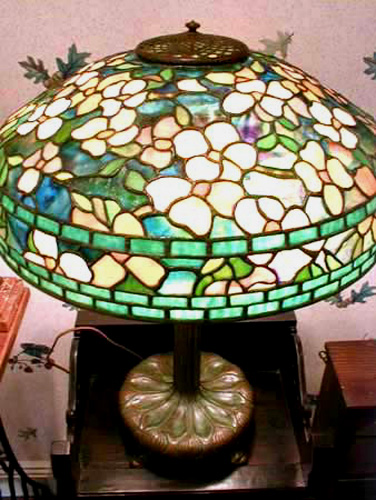
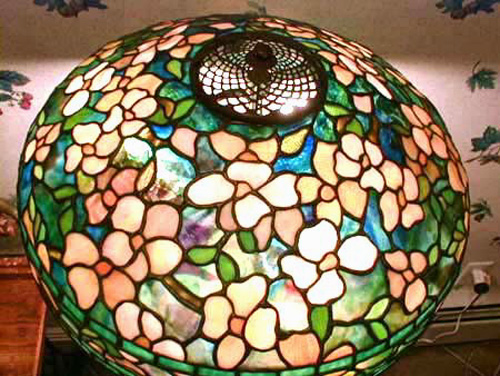
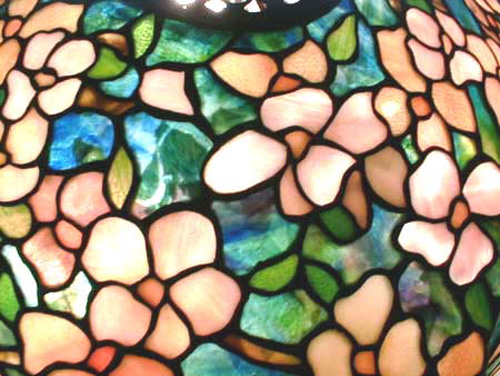
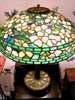
This is a
Tiffany
Studios 18" Dogwood shade sitting atop a Tiffany Studios bronze
base with green patina c. 1910. The entire lamp stands 23" high.
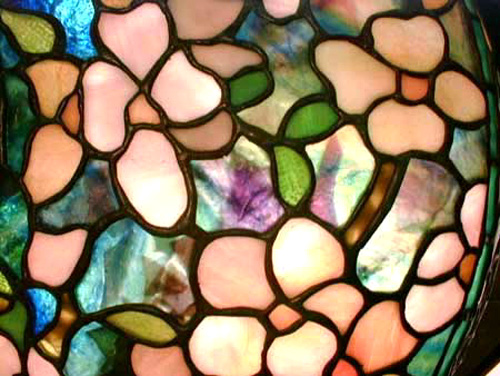
This shade is rare due to the use of Tiffany "confetti" glass
for background sky effect, offering different time of day perspectives
as you move around the perimeter of the shade and striated glass
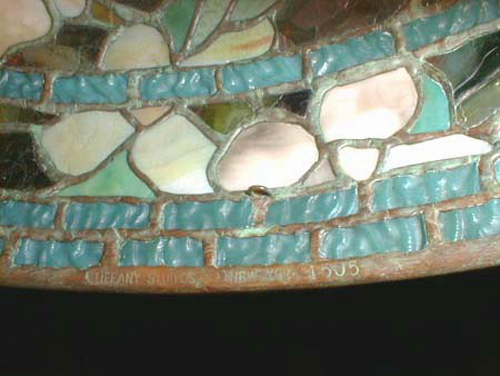
forming the dogwood flowers. The base and shade are properly marked
with authentic Tiffany Studios markings. The shade is marked Tiffany
Studios New York 1505 and the bronze base is marked Tiffany Studios
New York and 363. The base has the original and highly desirable
green patina. Rippled glass forms a border area around the bottom
of the shade and is unusual in that the ripples folds are inside
the shade, making for a backlight effect when viewed from the
exterior. Tiffany lamps look completely different when turned
off; in fact, you can barely see the confetti effect in the glass
when unlit. To this day, many glass making techniques originated
by Louis Comfort Tiffany such as the confetti effect cannot be
equally reproduced even with modern technology, making frauds
detectable to those experienced in seeing the real thing. Reference
Source: The
Lamps of Louis Comfort Tiffany by Martin
Eidelberg, Alice Cooney Frelinghuysen, Nancy McClelland, Lars
Rachen |

The
Lamps of Louis Comfort Tiffany
|
|
photo
3
photo
4
photo
5
photo
6
|
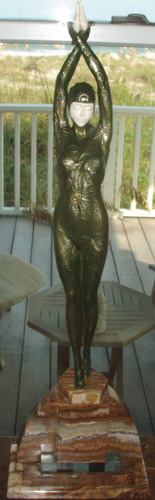
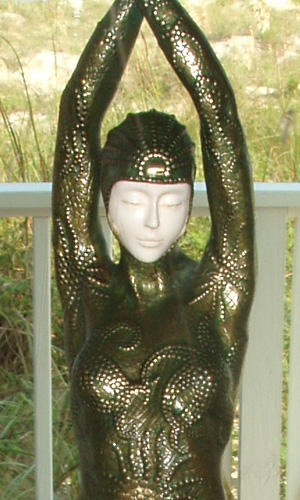
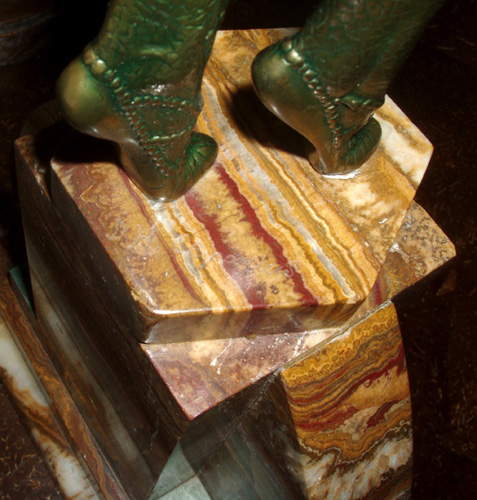
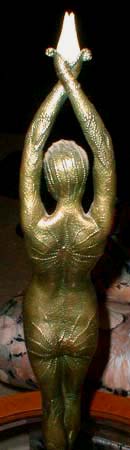
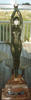
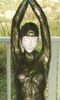
Circa 1920
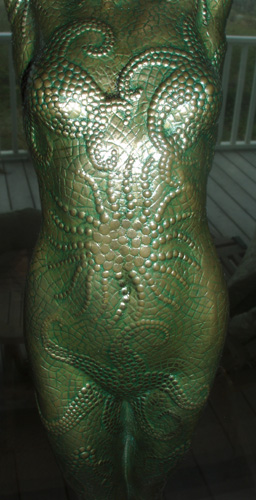
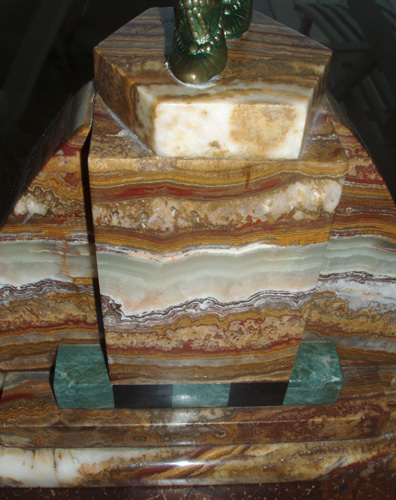
bronze and ivory figure "Starfish" mounted on a hand assembled,
multicolored marble base, by D.
H. Chiparus. The bronze figure itself measures 21.25" high
from the top of the marble base and has the original green patina.
The marble base rises 7.5" high, making the total work stand almost
29" high, the largest of the 3 sizes of Starfish produced. This
is an original period Chiparus bronze and ivory figure with the
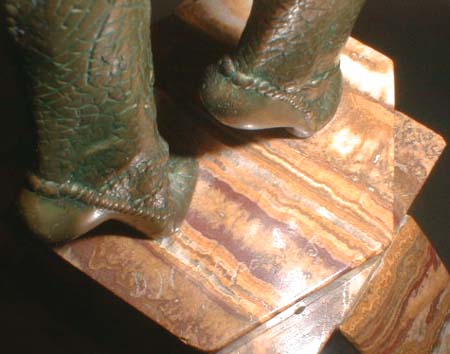
D.H. Chiparus signature properly etched into the top of the marble
base and the foundry mark "Etling Paris" etched into the rear
of the marble base. Etling was a retail shop in Paris during the
1920's and 30's which commissioned fine bronzes and the best in
opalescent pressed glass. Reproductions of Chiparus bronzes are
rampant and frequently misrepresented as original to the period.
Etched signatures on marble (rather than in the bronze) and foundry
marks are a good start, but the most important thing is to look
at the detail in the craftsmanship. On a true period Chiparus,
you can typically barely see the etched signature versus signatures
that are quite crude and evident in fakes- take a look at the
last photograph and try to make out the subtle signature. Chiparus
is frequently referred to as the master sculptor of the Art
Deco period, but others such as Preiss and Poertzal are also
widely collected today. Buy only from reputable and knowledgeable
dealers. Reference
Source: Chiparus:
Master of Art Deco by
Alberto Shayo |

Chiparus:
Master of Art Deco
|
|
photo
3
|
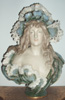
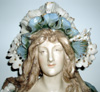
Turn-Teplitz amphora
Art
Nouveau period female bust by the Reissner Stellmacher &
Kessler (R St. K) Amphora Works in the Turn-Teplitz area of
Bohemia c. 1900. Generally recognized as the first and arguably
the best of the Amphora manufacturers, Reissner, Stellmacher
& Kessel was established in the Turn-Teplitz region of Bohemia
in 1892. Partners Hans and Carl Reissner, Edward Stellmacher,
and Rudolf Kessel after Kessel took over the remaining factories
of Alfred Stellmacher. This area of central Europe was close
to Dresden, Germany and benefited from the long tradition of
ceramics manufacturing among the peoples of eastern Germany.
The ceramics Reissner and his 2 partners produced was known
for its unique styles and the interesting glazes they used to
create what became known as "Amphora" pottery or simply "Teplitz."
Reissner, Stellmacher & Kessel (R. St. K.) displayed their
work in America for the first time at the 1893 Chicago World's
Fair where they were awarded a best in show prize and first
attracted the attention of the American buying public. The base
is properly marked with the red R. St. K factory mark as well
as 1637K and the number 1192 impressed. The bust stands
11.5" high to the top of the bonnet. Stellmacher was one of
the finest producers from the Turn-Teplitz area at the turn
of the century, where many fine artists worked. Take a look
at the magnificent detail in the bonnet and face; there's a
companion piece elsewhere in the gallery. Reference
Source: Art
Nouveau, 1890-1914 by Paul Greenhalgh
|

Art
Nouveau, 1890-1914
|
|
photo
3
photo
4
|
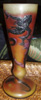
Period (within
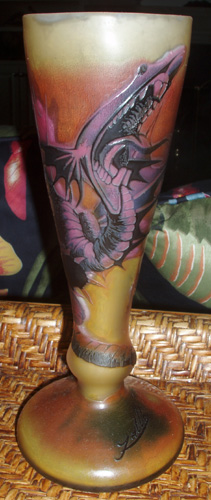
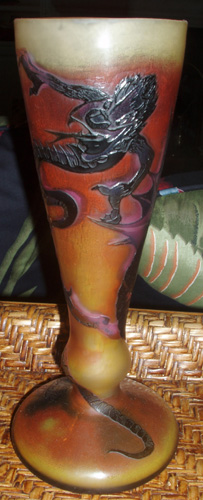
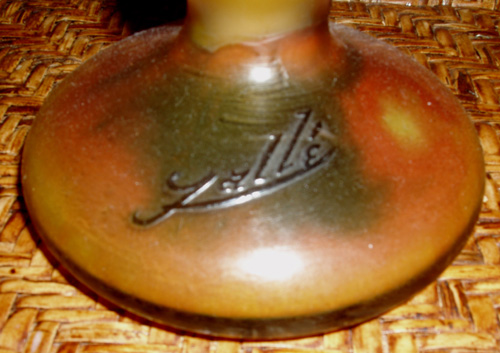
the time of Emile Galle's life) Galle four color Dragon vase c.
1905, a great example of acid etched cameo glass in four colors.
There is outstanding detail in the dragon and the serpent. The
vase measures 9.5" high and is properly signed Galle on the base.
The base has a polished pontil and rounded lower edge. Galle cut
back multicolored cameo glass by using a carving wheel or acid
to progressively reveal different colors and thereby create unique
designs. The Dragon vase is very rare and has amazing detail and
a great theme; not the companion serpent on the rear which is
equally detailed. Very few dragon vases were produced, and most
Galle production was floral or scenic. There are many Galle reproductions
on the market. Reference
Source: The
Corning Museum of Glass: A Decade of Glass Collecting by
David Whitehouse, Corning Museum of Glass |

The
Corning Museum of Glass: A Decade of Glass Collecting
|
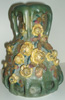 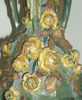 |
Turn-Teplitz
Amphora
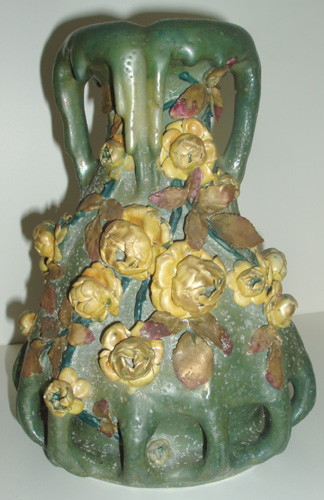
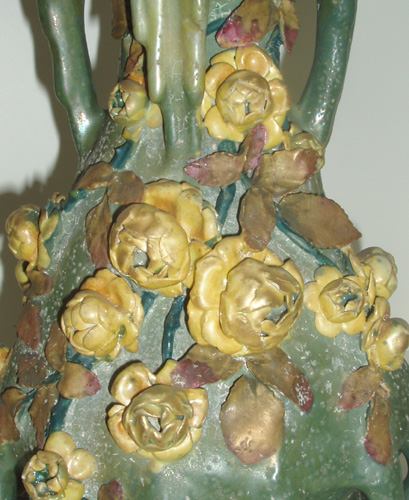
"lava" vase with extensive floral decorations is 9" high and c.
1895. Many flower buds cling to the sides of the vase, properly
marked on the bottom with EDDA in a raised area, the numbers 3622
58 K, Amphora in an elongated circle, and the crown mark for the
Imperial Amphora Works. Note the flowing lava effect, the
soft and pleasing colors, and the detailing in the numerous flowers.
There's a subtle iridescence in the glaze as well, making the
piece desirable for both design and execution. |
|
photo
3
photo
4 |
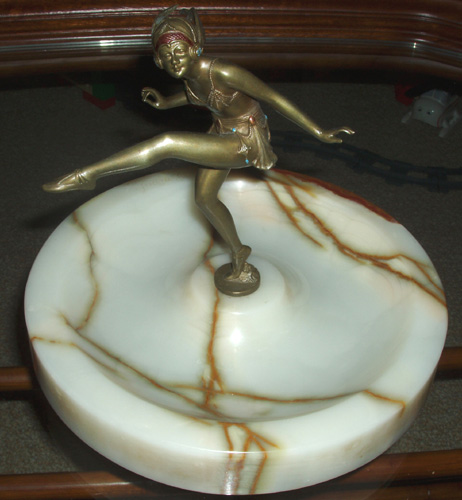
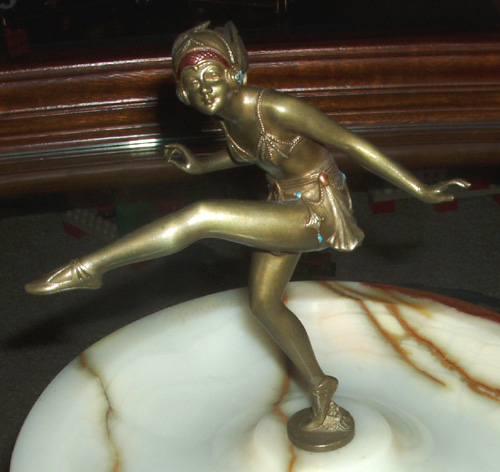
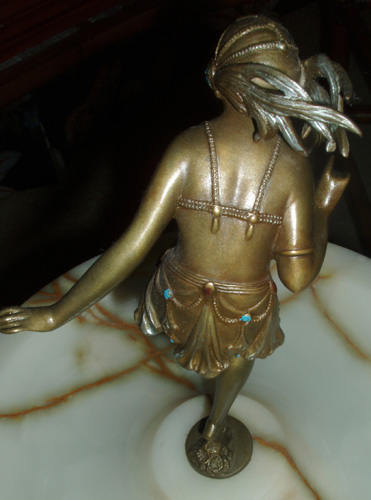
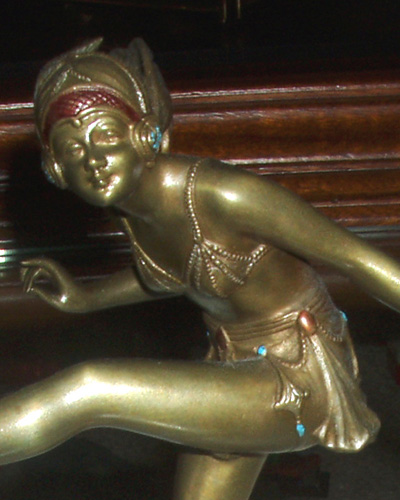
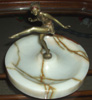
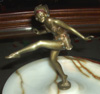
Period Art Deco marble
ashtray with bronze Art Deco woman dancer cold painted with
red, blue, and gray highlights by Bruno Zach c. 1920. The piece
is signed in the marble B Zach and measures 10.0" in diameter,
and the bronze dancer herself stands 7" high. Bruno Zach liked
to socialize with prostitutes and liked nothing better than
to incorporate them into his work. Bruno Zach was especially
known for his erotic work, some similar but many much more daring
than the Bergman factory in Austria which also produced "naughty"
bronzes during this period. Zach is recognized along with Chiparus
as being at the forefront of challenging cultural norms during
the Art
Deco movement of the 1920s and 1930s. Reference
Source: Art
Nouveau and the Erotic by Ghislaine
Wood
|

Art
Nouveau and the Erotic |
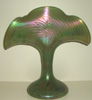 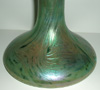 |
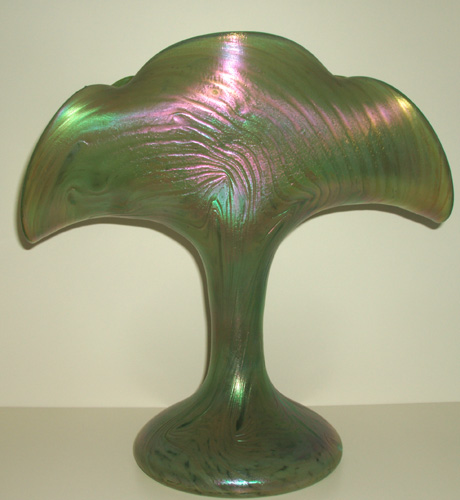
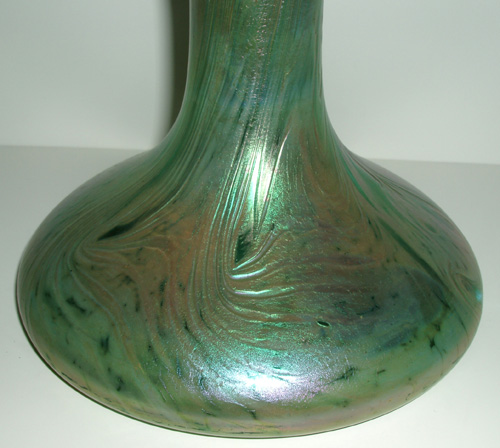
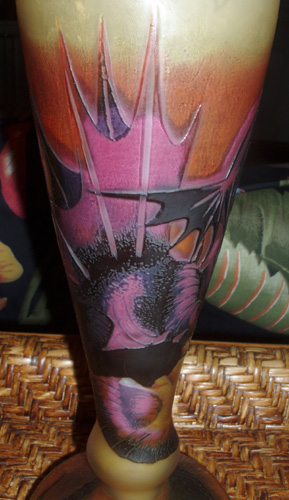
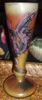
Large Loetz
fan vase from the Annagelb mit dunkelblau line c. 1925 stands
8.0" high in green iridescent glass with purple and rose highlights.
The vase has the traditional polished pontil and rounded bottom
edge. The glass is subtly rippled for added style, a swirling
effect which captures additional light and brings out the iridescent
colors. Unmarked as is most Loetz; even experts have trouble
authenticating some Loetz work. Loetz glass was made in many
varieties since its founding in 1840. Johann Loetz died in 1848,
but the factory was operated by his widow until 1879, when his
grandson took over. It was his work during the Art Nouveau period
of the early 20th century for which Loetz is best known today.
Loetz was one of the few rivals of Tiffany at the turn of the
century in the iridescent glass techniques now so priced by
collectors. Reference
Source: Loetz:
Bohemian Glass 1880-1940 (Lotz)
by Johann Lotz Witwe, Helmut Ricke, Jan
Mergl
|
Loetz:
Bohemian Glass 1880-1940 (Lotz)
|
 |
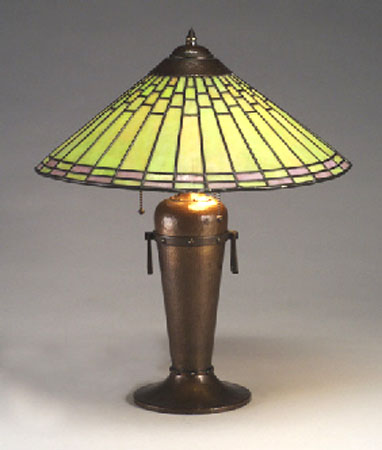
Exceptional
and rare Roycroft hammered copper table lamp with three sockets,
riveted baluster base, two angular drop handles, and conical shade
designed by Dard Hunter of lavender and green leaded glass. In
1895 Elbert Hubbard founded the Roycroft Campus in East Aurora,
New York, carving the motto "Head, Heart, Hand" into the front
door of the Inn. Roycroft would become a cornerstone of the American
Arts & Crafts movement, employing 500 artisans at its peak and
supplying hand crafted products to over 300 retail outlets around
the country until 1938. Roycroft produced many copper bookends,
vases, and other household items in small quantities, so their
work is quite rare. When founder Elbert Hubbard died in 1915 on
the Lusitania, the American Arts & Crafts movement began a
slow decline. Modernism and Art
Deco was on the rise, maintaining the streamlined design aesthetic
but returning to the use of luxury materials and design extravagance.
The lamp measures 22.5" high and 18.5" in diameter. Reference
Source: In
the Arts & Crafts Style by Barbara
Mayer, Rob Gray (Photographer), Elaine Hirschl Ellis
|

In
the Arts & Crafts Style
|
photo
3
photo
4
photo
5 |
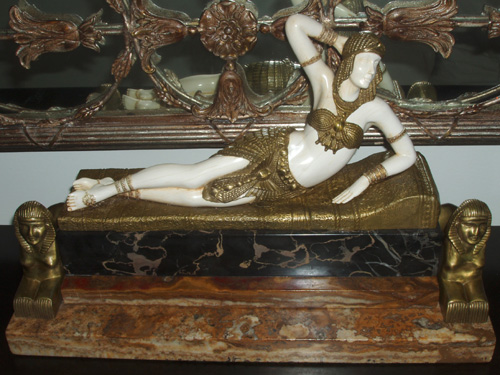
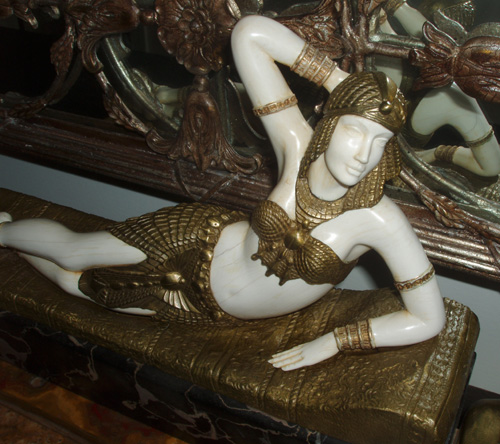
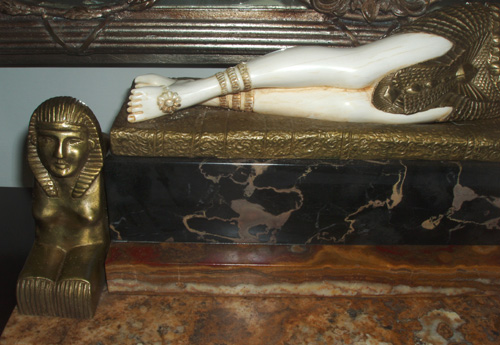
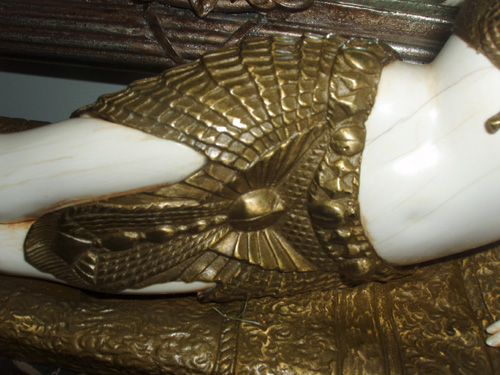
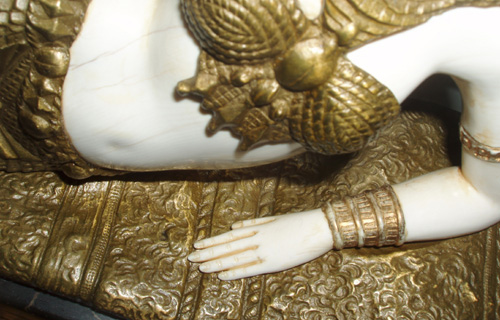
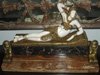
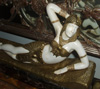
Bronze and
ivory figural "Cleopatra" mounted on a marble base, with bronze
lions on the corners c. 1920. The Egyptian day bed is properly
marked with the DH Chiparus signature, and the piece retains
its original gilded bronze finish. Notice that ivory ages, and
you can see the age lines on the body as you could in the Starfish
face. This is a good piece to see the precision detail in the
casting of the best Art Deco bronzes, and note the fine carving
of the ivory to create the hands with long, sinewy fingers, the
toes and ankle bracelet, and of course the facial details. The
base measures 18.0" long by 6.0" wide, and total height of the
work is 12.0." The bronze and ivory figure itself is 12.75" long.
Note that the sphinxes are female....that's Art Deco style! Reference
Source: Art
Deco: 1910-1939 by Tim
Benton, Charlotte Benton, Ghislaine Wood |

Art
Deco: 1910-1939
|
photo
3 |
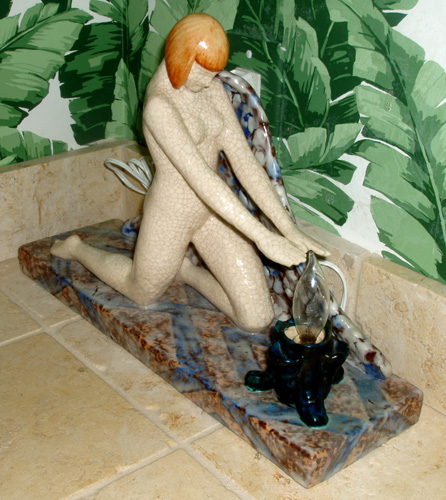
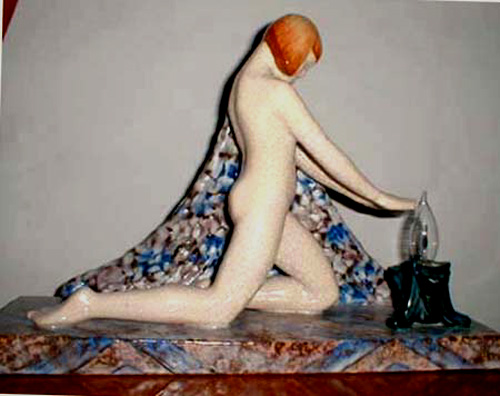
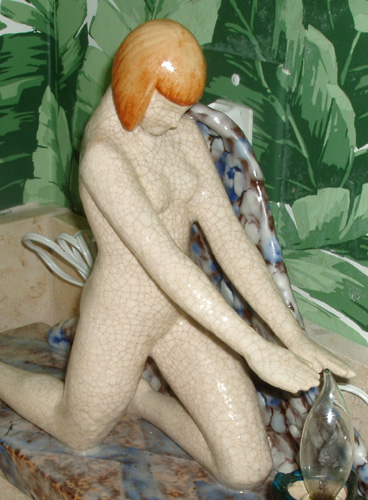
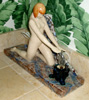
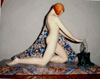
Period ceramic French
Art Deco porcelain boudoir lamp. Beautiful Deco nude woman kneels
over the flame against a blue backdrop. This piece is 15.5"
long and 5.0" deep, and it's properly marked on the base by
the manufacturer "D'Argyl" and underneath "France." Note the
intentional crazing in the skin, which is very pronounced in
this work and really adds a nice effect. Unusual and pure Deco
style. Reference
Source: Popular
Art Deco Lighting: Shades of the Past by Herb Millman, John
Dwyer
|

Popular
Art Deco Lighting: Shades of the Past
|
  |
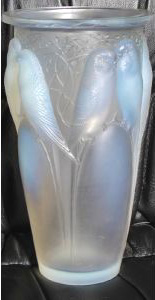
Rene
Lalique mint condition parakeet vase c. 1930, standing approximately
9.5" high and 5.5" in diameter at the top opening. Made of beautiful
French opalescent
glass, the vase is decorated around the perimeter with 4 pairs
of parakeets. Lalique glass is lead based, either mold blown or
pressed, and characteristically the glass is crystal in combination
with acid-etched relief. Later some items were made in as many
as 10 colors (red, amber, and green among them) and were occasionally
accented with enameling. These colored pieces, especially those
in, black, are highly prized by advanced collectors. This vase
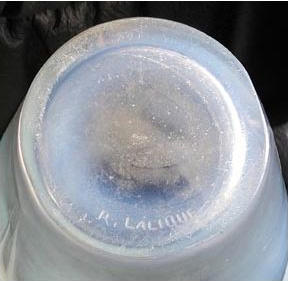
is properly signed on the bottom in acid R. Lalique. The R. Lalique
signature was only used until 1945 with the death of Rene. Reference
Source: Warman's
Lalique: Identification and Price Guide by
Mark F. Moran
|

Warman's
Lalique: Identification and Price Guide
|
photo
3 |
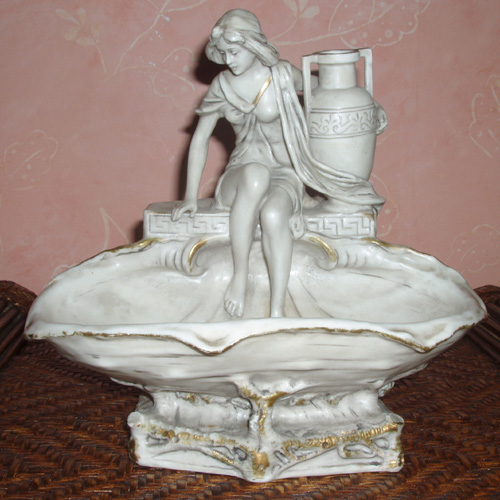
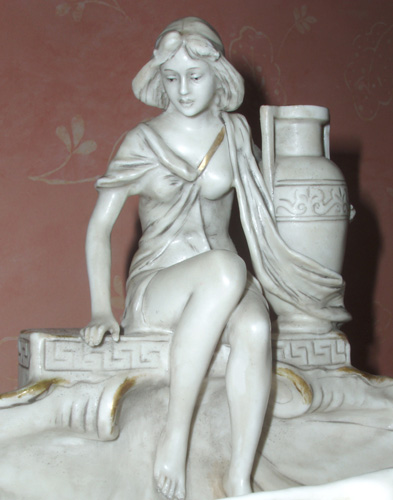
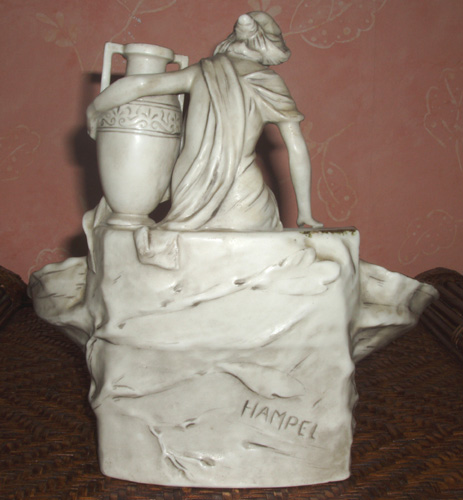
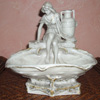
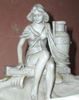
Royal Dux
Bohemia figural ceramic c. 1905. A woman sits atop a scalloped
shell base holding a jug. This piece has the small pink Royal
Dux triangle mark with an E in the center indicating pre-1918
production, the words "Royal Dux Bohemia," and the number 1119
and the number 28 raised. This piece stands 9.0" high and is signed
on the rear by the artist "Hampel," a rarity in most Royal Dux
production. |
|
  |
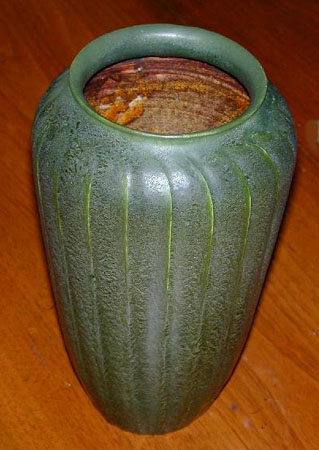
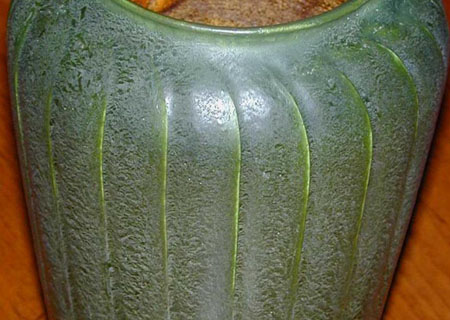
Grueby
Pottery 7.5" high Arts & Crafts vase in the classic Grueby
matte green glaze. Grueby was known for their deep emerald green
matte glazes and "razor clam" incising which you see on this vase,
so perfectly evocative of the Arts & Crafts emphasis on hand
craftsmanship. William H. Grueby (1867-1925) founded the Grueby
Faience Company in 1897 in Boston, MA. Grueby was a ceramic artist
who had been experimenting with more traditional styles when he
traveled to Chicago to attend the World's Columbian Exposition
of 1893. There, Grueby was exposed for the first time to the new
matte glazes being introduced by French artisans around that time.
Upon his return to his Boston home, Grueby founded the company
and began a period of about five years during which he experimented
and perfected his own matte pottery glazes. Focusing mostly on
art pottery vases, he introduced his first line of matte glaze
wares in 1898. This vase has the Grueby Pottery company marks
incised on the bottom. Reference
Source: The
Ceramics of William H. Grueby by Susan
J. Montgomery |

The
Ceramics of William H. Grueby |
 
photo
3
photo
4 |
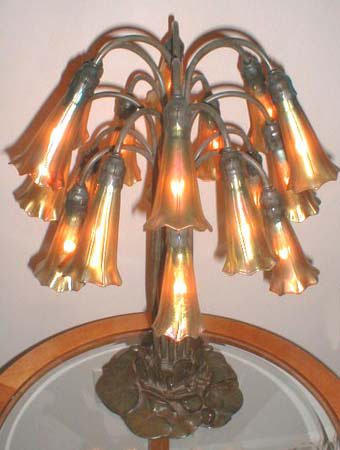
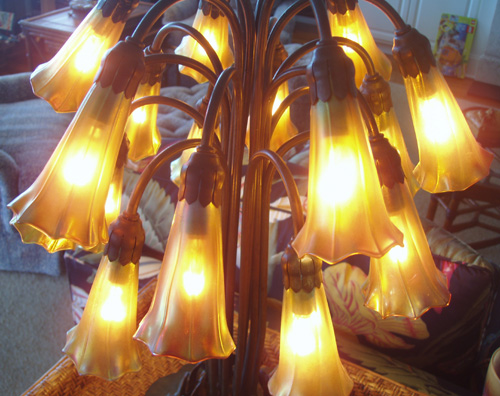
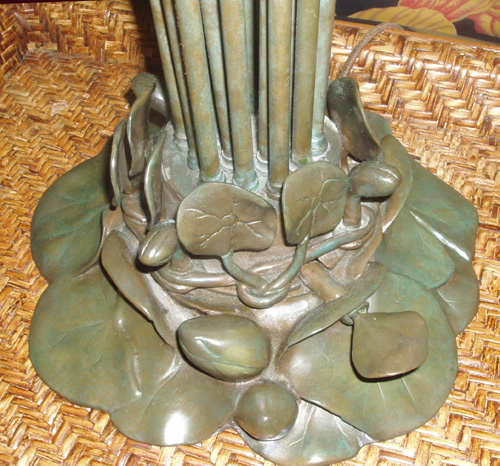
Evoking the forms of
nature was one of the signature elements of the Art Nouveau
movement, and Louis Comfort Tiffany introduced his 18 light
pond lily lamp to the world at the famous Paris Art Nouveau
Exhibition. The bronze base is intricately shaped in the form
of a pond lily, and one of the lily leaves is the on/off switch.
With all original green patina, the base is signed Tiffany Studios,
New York 383, and all the shades are gold Favrile iridescent
glass and signed L.C. Tiffany. The fact that this lamp stands
slightly higher than other Tiffany lilies and that all 18 shades
are signed L. C. Tiffany and not simply LCT are suggestions
that this was early production c 1900. Fabrication of Tiffany
lamps began in 1885 on commission, with the majority of them
being made between 1895 and 1920. It was not until 1899 that
Tiffany publicly introduced the lamps for sale. Reference
Source: Lamps
of Tiffany by
Egon Neustadt
|
Lamps
of Tiffany
|
|
|
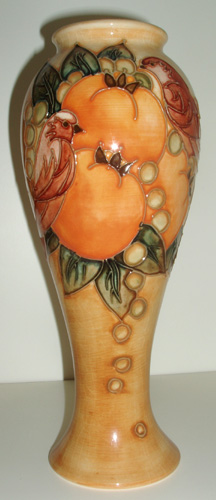
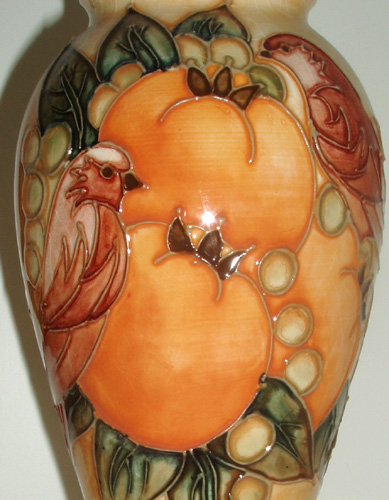
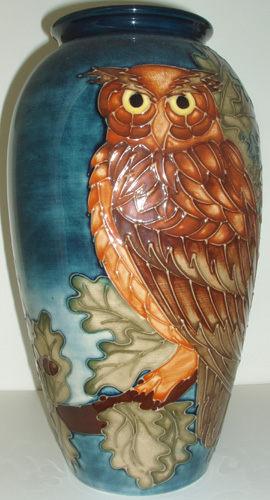
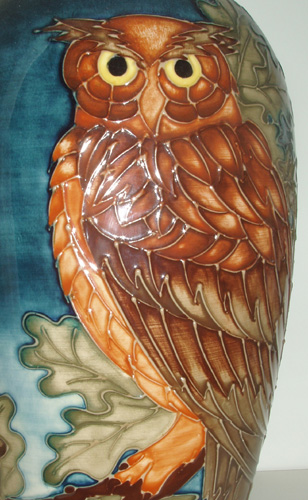
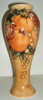
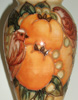
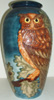
Two Moorcroft
Pottery Anemone vases from the early 20th century. The first
is a rare Moorcroft bird vase with two birds on each side in shades
of rose on a cluster of orange fruit with leaves and berries.
This vase stands 11.0" high and is 2.75" wide at the top opening.
The bottom is marked with the WM initials for William Moorcroft
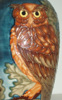
along with "Moorcroft" and "Made in England." The owl vase stands
a full 12.0" high and is 4.25" wide at the top opening. The large
owl is done in shades of orange and maroon and has two large yellow
eyes. He stands on a branch full of leaves and berries, and the
rear of the vase has a half moon.. The bottom is marked with the
WM initials for William Moorcroft plus "Moorcroft", "Made in England",
the artist's initials, and the production 333/500. Moorcroft pottery
was first made in Burslem, England in 1913; previously, William
Moorcroft had managed the art pottery department for James MacIntyre
& Co. from 1898 to 1913. While Moorcroft continues in operation
today, William Moorcroft died in 1945. Reference
Source: British
Art Deco Ceramics by Colin
Mawston |

British
Art Deco Ceramics
|
|
|
Cool
Coupons & Promo Coupon Codes for Disney, Brookstone,
Avon, Netflix, eBags, and more @ our Coupon
Site!
|
|
|
|
|
|
Amazon.com:
Earth's Biggest Store!
|
|
|
|
Collector Book Purchases & Advertising Support Our
Free Online Museums, Antiques & Collectibles Information,
and Directories - Thank You! |
|
|
|
|
|
|
|
Display
Cases for collectibles, figurines, diecast
cars, sports memorabilia, dolls, and more!
|
|
Privacy
Policy
|
|
Copyright
© 1998 - 2014 Collectics. All rights reserved.
|
|