|
Antiques,
Collectibles, Vintage Shopping
|
|
|
|
Collector
Books, Reviews, Education
|
|
|
|
Online
Museums & Directories
|
|
|
|
Discover
Collectics Variety
|
|
|
|
Cool
Stuff
|
|
|
|
|
|
|
|
|
Vintage
Sunglasses Shop - Authentic
vintage Revo, Ray-Ban, Armani,
Carrera, Alpina, Cazal, Persol, Vuarnet,
Bolle, Oliver Peoples, and French
cat's eye sunglasses!
|
|
|
|
Collectics
Antique & Vintage Sale
Coupon: Save 10% On Entire Order!
|
|
|
The Collectics
Antiques Information & Education pages are
designed to further knowledge of antiques, collectibles,
collecting styles, periods, artists, designers,
and manufacturers of fine and decorative arts.
To learn more, our Antique
Collector Bookstore lists only the best
collector books and price guides, complied by
surveys of top antique dealers and auction houses.
For a different shopping experience, you can
also browse our featured selections in a fun
new way with the Antique
Price Guides Slideshow or see current Amazon.com
bestsellers by using Collector
Books Topic Search.
|
| "prices 30% below your local antique shop or vintage store plus free shipping." Collectibles Guide 2010 |
| Peanuts
© United Feature Syndicate, Inc.
|
|
|
|
|
ANTIQUE
MILK GLASS INFORMATION & HISTORY
|
|
|
Collectics
Customer Appreciation Sale
Coupon: Save 10% On Entire Order!
|
|
| Milk
glass takes its name from its "milky white" color and
was originally intended to give a look like porcelain and china
but not be as expensive or difficult to product. It was originally
called Opal Ware by early glassmakers, but the name milk glass
soon rose to prominence as an apt description of the genre of
glass. The coloring of milk glass is key when looking for an old
example versus newer, still reproduced pieces. Milk glass was
first produced in the 1500s, but most of what exists today in
antique milk glass was made from the 1700s in England and onward
around the world. Although most milk glass is associated with
the milky white color, milk glass also refers to colored glass
which is similarity milky in color. Blue milk glass is particularly
desirable, mostly made in France, but you can also find green,
pink, yellow, and amethyst. Some antique and vintage milk glass
has hand painting on them as was common in dresser sets or salt
& pepper shakers. Milk glass was used to make a tremendous
variety of everyday and luxury items including glasses, dishes,
vases, jars, perfume bottles, figurines, match holders, lanterns,
and decorative boxes. Much of the older milk glass incorporates
figural design into the production of the piece and would include
animals - particularly barnyard animals like cows and roosters
- flowers, people, landmarks, and everyday items used around the
home. Milk glass is molded, making it particularly well suited
to its use in hobnail glass, a raised pattern of small bumps,
and lace which simulates in glass the look of fine lace.
There were many manufacturers
of milk glass including a number of well known American manufacturers:
Fenton, Anchor Hocking, Westmoreland, Boston and Sandwich Glass
Company, Fostoria, Atterbury, Vallerysthal, Flaccus, McKee,
Belknap, Duncan Glass, Indiana Glass, L. E. Smith, and U.S.
Glass Company. Aside from the hobnail pattern, a long popular
pattern in milk glass is the paneled grape pattern by Westmoreland
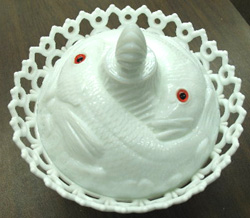
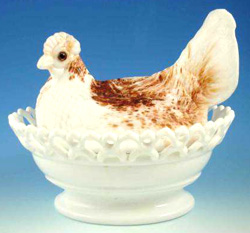
Glass, in business from 1889 until 1985. The "hen and nest"
pattern is another very popular style today, a covered jar that
looks like a hen sitting on a nest and made by a variety of
manufacturers in white and other colors. One way to tell the
difference between old and new milk glass is by looking at the
edges; older milk glass appears almost transparent around the
edges, and light can be viewed through the piece. Newer milk
glass is more white opaque, and light will not show through
the glass even around the perimeter. This is not to say newer
pieces cannot be of high quality and decorative, but they do
not have the same value and should not be misrepresented by
sellers.
Ever been fooled by
a fake or a seller that didn't deliver the goods as described?
At Collectics, we authenticate and stand behind everything we sell, at
prices "30% below your local antique shop" according
to Collectibles Guide 2010. Please browse our main Antiques
& Collectibles Mall to find a treat for yourself or
a great gift for others, all with free shipping. Thanks for visiting and shopping at Collectics!
Buy
vintage and antique milk glass on the Collectics Glass
and Fine Antiques
pages, or use our convenient Search
Engine!
Sell
or consign finer examples of vintage and antique milk glass
at Collectics, where we earn our customers' trust everyday!
Read about our top performing national consignment program for estate and personal collections. |
|
|
Cool
Coupons & Promo Coupon Codes for Disney, Brookstone,
Avon, Netflix, eBags, and more @ our Coupon
Site!
|
|
|
|
|
|
Amazon.com:
Earth's Biggest Store!
|
|
|
|
Collector Book Purchases & Advertising Support Our
Free Online Museums, Antiques & Collectibles Information,
and Directories - Thank You! |
|
|
|
|
|
|
|
Display
Cases for collectibles, figurines, diecast
cars, sports memorabilia, dolls, and more!
|
|
|
|
Copyright
© Collectics. All rights reserved.
|
|