|
Antiques,
Collectibles, Vintage Shopping
|
|
|
|
Collector
Books, Reviews, Education
|
|
|
|
Online
Museums & Directories
|
|
|
|
Discover
Collectics Variety
|
|
|
|
Cool
Stuff
|
|
|
|
|
|
|
|
|
Vintage
Sunglasses Shop - Authentic
vintage Revo, Ray-Ban, Armani,
Carrera, Alpina, Cazal, Persol, Vuarnet,
Bolle, Oliver Peoples, and French
cat's eye sunglasses!
|
|
|
|
Collectics
Antique & Vintage Sale
Coupon: Save 10% On Entire Order!
|
|
|
The Collectics
Antiques Information & Education pages are
designed to further knowledge of antiques, collectibles,
collecting styles, periods, artists, designers,
and manufacturers of fine and decorative arts.
To learn more, our Antique
Collector Bookstore lists only the best
collector books and price guides, complied by
surveys of top antique dealers and auction houses.
For a different shopping experience, you can
also browse our featured selections in a fun
new way with the Antique
Price Guides Slideshow or see current Amazon.com
bestsellers by using Collector
Books Topic Search.
|
| "prices 30% below your local antique shop or vintage store plus free shipping." Collectibles Guide 2010 |
| Peanuts
© United Feature Syndicate, Inc.
|
|
|
|
|
BAKELITE,
LUCITE, CELLULOID, AND CATALIN INFORMATION, HISTORY, IDENTIFICATION
|
|
|
Collectics
Customer Appreciation Sale
Coupon: Save 10% On Entire Order!
|
|
| The
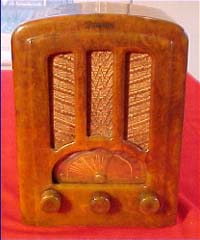
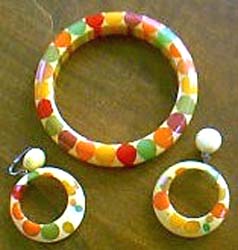
most highly collected vintage plastic, Dr. Leo Baekeland
patented the process of making bakelite in 1909. Similar materials
like catalin used in radios and other consumer goods were made
by other companies. Bakelite was very widely used and in demand
for radios, jewelry, kitchen utensils and dinnerware, and as decorative
features on other items like cocktail shakers. Bakelite is a type
of plastic that is made under high heat, but it cannot be recycled.
Bakelite is a very flexible material which can be decorated through
molds, carvings, inlays, lamination, etc., and it could be made
in most any color. Bakelite can change color, with whites usually
turning more cream colored for example. The exposed area can darken
and acquire scratches, and a type of patina forms on the surface.
It can be opaque, translucent, or transparent. Most, but
not all, Bakelite will emit an acid smell when placed under hot
water. Bakelite is a sturdy material and is rather heavy, more
so than celluloid or lucite.
Lucite is a resin created
by DuPont in 1937. DuPont widely licensed Lucite for use in
jewelry because it was inexpensive and easy to work with in
carving, inlays, etc. Like Bakelite, Lucite could be manufactured
in most any color and can run from opaque to transparent. Lucite
was particularly popular from about 1940 to 1953, but it is
still produced and widely used today. Imbedded Lucite made during
this period by incorporating glitter, rhinestones, sea
shells, and other materials was widely used in hard sided purses
which are actively collected today.
Celluloid was one of
the first plastics to be widely used in making jewelry. Celluloid
was originally developed in England in the 1850s but first commercialized
in 1868 by John Wesley Hyatt, whose company eventually became
the American Celluloid and Chemical Manufacturing Company--
subsequently the Celanese Corporation. Jewelry made of
celluloid dates to about 1900 and was quite popular during the
Art Deco period. Celluloid has characteristics which are different
from other plastics. Celluloid items tend to be thinner and
lighter than Bakelite, and it is definitely more brittle and
can crack when heated to higher temperatures. Some celluloid
pieces can even be flammable, and while more brittle than Bakelite
it can still be bent or twisted. Under hot water, most celluloid
has a smell like vinegar or old camphor. Celluloid jewelry can
be damaged by moisture, temperature extremes, or chemicals.
Celluloid that has been stored in a closed environment for long
periods can also dull quite dramatically and even crack.
The best and safest way
to test and identify vintage plastics is with simichrome polish
which you can purchase at most hardware stores. It's somewhat
expensive, but it is also great for polishing Bakelite, silver,
and most any metal. Polished Bakelite will leave a yellow residue
on the cloth regardless of what color the Bakelite is. Another
good way to test for Bakelite is to hold it under hot water
for about 30 seconds and then smell it. Bakelite has a very
distinct odor somewhat like a shellac. If there is no odor,
it's likely the piece is Lucite Dow Bathroom Cleaner is widely
used to test vintage plastics, but you have to be very careful
not to harm any gloss finishes on the the piece being tested.
Test this method on a small area first on the back or inside
of a piece. Spray a small amount of Dow Cleaner on a swab and
rub it on the test area for a few seconds. If the swab develops
a yellow color regardless of the color of the plastic, the piece
is probably Bakelite To be safe, wash the tested area immediately
with warm water since it can damage the finish. You can also
use Formula 409 in the same way as Dow, and it's probably safer
for the Bakelite You can strip the finish or gloss from Bakelite
if you rub too hard, making it dull and hard to restore. If
you inadvertently do this, use simichrome polish to attempt
to restore the finish. If necessary, repeat the polishing several
times. Some people also use car wax to attempt this, but personally
I prefer simichrome. It is possible for Bakelite to fail one
of these tests if the piece is dirty, has an applied finish
or sealant not original to the piece, or which has a damaged
finish.
Ever been fooled by a
fake or a seller that didn't deliver the goods as described?
At Collectics, we authenticate and stand behind everything we
sell, at prices "30% below your local antique shop"
according to Collectibles Guide 2010. Please browse our main
Antiques & Collectibles
Mall to find a treat for yourself or a great gift for others,
all with free shipping. Thanks for visiting and shopping at
Collectics!
Buy
vintage Bakelite, Lucite, celluloid, and other vintage plastics
on the Collectics Bakelite
& Lucite and Accessories
pages. If you prefer, please use our convenient Search
Engine!
|
|
|
Cool
Coupons & Promo Coupon Codes for Disney, Brookstone,
Avon, Netflix, eBags, and more @ our Coupon
Site!
|
|
|
|
|
|
Amazon.com:
Earth's Biggest Store!
|
|
|
|
Collector Book Purchases & Advertising Support Our
Free Online Museums, Antiques & Collectibles Information,
and Directories - Thank You! |
|
|
|
|
|
|
|
Display
Cases for collectibles, figurines, diecast
cars, sports memorabilia, dolls, and more!
|
|
|
|
Copyright
© Collectics. All rights reserved.
|
|