|
Antiques,
Collectibles, Vintage Shopping
|
|
|
|
Collector
Books, Reviews, Education
|
|
|
|
Online
Museums & Directories
|
|
|
|
Discover
Collectics Variety
|
|
|
|
Cool
Stuff
|
|
|
|
|
|
|
|
|
Vintage
Sunglasses Shop - Authentic
vintage Revo, Ray-Ban, Armani,
Carrera, Alpina, Cazal, Persol, Vuarnet,
Bolle, Oliver Peoples, and French
cat's eye sunglasses!
|
|
|
|
Collectics
Antique & Vintage Sale
Coupon: Save 10% On Entire Order!
|
|
|
The Collectics
Antiques Information & Education pages are
designed to further knowledge of antiques, collectibles,
collecting styles, periods, artists, designers,
and manufacturers of fine and decorative arts.
To learn more, our Antique
Collector Bookstore lists only the best
collector books and price guides, complied by
surveys of top antique dealers and auction houses.
For a different shopping experience, you can
also browse our featured selections in a fun
new way with the Antique
Price Guides Slideshow or see current Amazon.com
bestsellers by using Collector
Books Topic Search.
|
| "prices 30% below your local antique shop or vintage store plus free shipping." Collectibles Guide 2010 |
| Peanuts
© United Feature Syndicate, Inc.
|
|
|
|
|
GUSTAV
STICKLEY, L&JG, AND STICKLEY BROTHERS FURNITURE INFORMATION,
HISTORY, BIOGRAPHY
|
|
|
Collectics
Customer Appreciation Sale
Coupon: Save 10% On Entire Order!
|
|
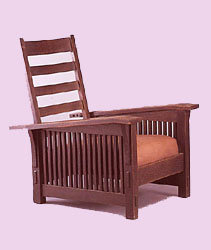
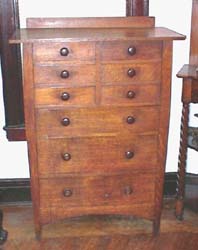
| The brothers
Albert and Leopold Stickley founded the original Stickley Brothers Company
in 1891 in Grand Rapids, Michigan. They also established operations in
England which first exposed them to the European arts and crafts movement
that was to prove so influential for all the brothers. Stickley Brothers
manufactured simple yet finely crafted furniture in the arts and crafts
style for the European market, but soon they were also importing these
styles into the United States as U.S. consumers developed a more sophisticated
taste in design. Gustav (1858-1942), the best known of the Stickley Brothers,
was born in Wisconsin as the son of German immigrants. Early in his teens,
Gustav began working with his father as a stone mason where he first began
to appreciate crafts. Gustav began working in his uncle Jacob Schlaeger's
chair factory in Brandt, Pennsylvania in 1870, leaving in 1884 to establish
his own business with his two brothers Charles and Albert in Binghamton,
NY.
Gustav traveled to England in 1898 where
he was first exposed himself to the European arts and crafts movement,
returning to the U.S. to establish United Crafts which later became widely
known as Craftsman Workshops. While in Europe, Gustav became familiar with
the design philosophy of William Morris and John Ruskin. Stickley Brothers
introduced Arts
and Crafts style furniture to the U.S. market along with utopian work
communities like Roycroft which had also adopted the clean and simple design
principles of hand craftsmanship of the arts and crafts movement. Gustav
first published The Craftsman magazine in 1901, a chronicle of the movement
and its design principles. The Craftsman heralded the arts and crafts style
in home design, decorating, and even gardening, becoming the best known
and most widely read publication of arts and crafts design. Harvey Ellis
was hired to write for The Craftsman in 1903, but he soon began working
with Gustav to design a wider variety of the simple, finely crafted furniture
and accessories for which Stickley Brothers is still known today. Where
Gustav's designs were somewhat more substantial, Ellis retained the simplicity
and fine craftsmanship while evolving a more comfortable, elegant style
reminiscent of the Scottish designer Charles Rennie Mackintosh. The labor
intensity and limited market of Stickley designs coupled with the approach
of World War I led to the bankruptcy of the company in 1915. At that point,
his younger brothers Leopold and John George assumed Gustav's debts, took
over his workshops and inventory, and formed the L & JG Stickley Company
which still adhered to the design principles of Gustav's Craftsman Workshops.
The L & JG Stickley Company followed
the same principles of furniture design pioneered by Gustav, but they also
fostered more sense of design freedom among their craftsmen which led to
a more diverse production. By this time, many U.S. manufacturers were copying
the Stickley designs, creating an entire industry around the "mission style"
furniture as Stickley's work had come to be known. While Stickley furniture
always had a degree of machine involvement in creating the design, Gustav
and his brothers really looked to machining more as a precursor for hand
crafted details. This balance provided the foundation of the American arts
and crafts movement, where machines were used to a limited but productive
degree in the furniture designs, bringing down the cost sufficiently to
open up the market to the middle classes. This is a distinction unique
to the American movement, for in England any dependence whatsoever on machinery
was shunned and made English arts and crafts designs too costly for most
people. Designs were simple yet elegant, free from ornamentation and allowing
the craftsmanship itself to show through in the structural elements such
as mortise & tenon and tongue & groove joints in the furniture.
The Stickleys always appreciated the inherent beauty of wood and leather,
and they did not feel the need to embellish the cleanliness of the design.
In 1974, L & JG
Stickley was sold by Mrs. Louise Stickley to Alfred and Aminy
Audi whose family still own and operate the company today. Alfred's
father E. J. Audi was a close friend of Leopold Stickley and
already successful in the furniture industry. It was believed
by the Stickleys that the Audi family would maintain the high
quality craftsmanship which had become so closely associated
with their name. Indeed, many of Gustav and L & JG Stickley's
designs are still made today in the Stickley Mission Oak and
Cherry Valley collections.
Ever been fooled by
a fake or a seller that didn't deliver the goods as described?
At Collectics, we authenticate and stand behind everything we sell, at
prices "30% below your local antique shop" according
to Collectibles Guide 2010. Please browse our main Antiques
& Collectibles Mall to find a treat for yourself or
a great gift for others, all with free shipping. Thanks for visiting and shopping at Collectics!
Buy
period Stickley and other Arts & Crafts artists and manufacturers on
the Collectics Fine Antiques
pages, or
search the entire site for great antiques, collectibles, and
crafts for every collector!
Sell
or consign period Gustav Stickley, Roycroft, Dirk van Erp, and
other finer American arts & crafts antiques at Collectics.
Read about our top performing national consignment
program for estate and personal collections.
|
|
|
Cool
Coupons & Promo Coupon Codes for Disney, Brookstone,
Avon, Netflix, eBags, and more @ our Coupon
Site!
|
|
|
|
|
|
Amazon.com:
Earth's Biggest Store!
|
|
|
|
Collector Book Purchases & Advertising Support Our
Free Online Museums, Antiques & Collectibles Information,
and Directories - Thank You! |
|
|
|
|
|
|
|
Display
Cases for collectibles, figurines, diecast
cars, sports memorabilia, dolls, and more!
|
|
|
|
Copyright
© Collectics. All rights reserved.
|
|