|
Antiques,
Collectibles, Vintage Shopping
|
|
|
|
Collector
Books, Reviews, Education
|
|
|
|
Online
Museums & Directories
|
|
|
|
Discover
Collectics Variety
|
|
|
|
Cool
Stuff
|
|
|
|
|
|
|
|
|
Vintage
Sunglasses Shop - Authentic
vintage Revo, Ray-Ban, Armani,
Carrera, Alpina, Cazal, Persol, Vuarnet,
Bolle, Oliver Peoples, and French
cat's eye sunglasses!
|
|
|
|
Collectics
Antique & Vintage Sale
Coupon: Save 10% On Entire Order!
|
|
|
The Collectics
Antiques Information & Education pages are
designed to further knowledge of antiques, collectibles,
collecting styles, periods, artists, designers,
and manufacturers of fine and decorative arts.
To learn more, our Antique
Collector Bookstore lists only the best
collector books and price guides, complied by
surveys of top antique dealers and auction houses.
For a different shopping experience, you can
also browse our featured selections in a fun
new way with the Antique
Price Guides Slideshow or see current Amazon.com
bestsellers by using Collector
Books Topic Search.
|
| "prices 30% below your local antique shop or vintage store plus free shipping." Collectibles Guide 2010 |
| Peanuts
© United Feature Syndicate, Inc.
|
|
|
|
|
OPALESCENT
GLASS INFORMATION & HISTORY
|
|
|
Collectics
Customer Appreciation Sale
Coupon: Save 10% On Entire Order!
|
|
| Opalescent
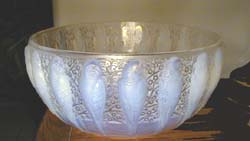
glass is a generalized term for clear and semi-opaque pressed
glass, cloudy, marbled, and sometimes accented with subtle coloring
all combining to form a milky opalescence in the glass. While
René
Lalique may be recognized by most as the pinnacle of opalescent
glassmaking, stained glass first evolved in the late 1800's and
early 1900's during the Art Nouveau period when American glassmakers
transformed European stained glass used in cathedrals into the
translucent milky glass we now refer to as opalescent. John LaFarge
and Louis
Comfort Tiffany were two American artists who first experimented
with opalescent effects, driven by their desire to use glass in
creating beautiful visual scenes in art without painting. Opalescent
glass was first developed and patented by John Lafarge in 1879,
but it was Tiffany who created the masterworks in glass for which
he is still so well known today. Tiffany created totally new colors
in glass, new types of glass unparalleled in depth and coloration,
and used glass in new forms that evoked the forms of nature.
The opalescent effect is a glassmaking
technique used by many manufacturers to greater or lesser degrees of artistry,
produced in the cooling process which creates the milky opalescent effect
which illuminates any coloration when light shines on it. Sometimes the
opalescent effect was created along the edge of a piece, often coupled
with wavy effects and making for an elegant yet subtle look. This opalescence
is also created in the glassmaking by alternating heating and cooling of
the glass and with the addition of chemical additives to create the desired
effect. Many U.S. manufacturers made this type of opalescent glass, most
notably Fenton,
Northwood,
Hobbs, and American Glass, while Davidson's was the major European manufacturer
based in the U.K. and giving their wares the marketing name of Pearline.
There is also a type of opalescent glass which is made in layers, and again
the heating and re-heating process is used to create the opalescent effect
with the addition of chemical agents. The degree and location of the opalescence
is controlled as such by the glassmaking process, and by the thickness
of the glass itself as it forms itself in the molds.
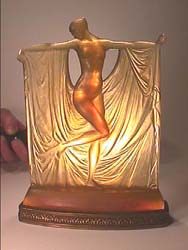
Given the intricacy
of some of the designs, the production of the metal molds in
sufficient detail was an important part of the process. Many
of the molds for French opalescent glass of the Art Deco period
were done by Franckhauser, who did work for Sabino and other
contemporaries of Lalique. Most of the finer glass of this period
was done by the French, but the English firm of James J. Jobling
also created some innovative designs after having earlier sought
to sign distribution deals with some of the major French factories.
Today, few glassmakers still make opalescent glass primarily
due to the toxicity of the chemicals needed to execute the complex
glassmaking process.
Ever been fooled by
a fake or a seller that didn't deliver the goods as described?
At Collectics, we authenticate and stand behind everything we sell, at
prices "30% below your local antique shop" according
to Collectibles Guide 2010. Please browse our main Antiques
& Collectibles Mall to find a treat for yourself or
a great gift for others, all with free shipping. Thanks for visiting and shopping at Collectics!
Buy
period Lalique, Fenton, Northwood, Carnival, Imperial, and other finer
art glass on the Glass &
Crystal and Fine Antiques pages, or search the entire site for great antiques,
collectibles, and crafts for every collector!
|
|
|
Cool
Coupons & Promo Coupon Codes for Disney, Brookstone,
Avon, Netflix, eBags, and more @ our Coupon
Site!
|
|
|
|
|
|
Amazon.com:
Earth's Biggest Store!
|
|
|
|
Collector Book Purchases & Advertising Support Our
Free Online Museums, Antiques & Collectibles Information,
and Directories - Thank You! |
|
|
|
|
|
|
|
Display
Cases for collectibles, figurines, diecast
cars, sports memorabilia, dolls, and more!
|
|
|
|
Copyright
© Collectics. All rights reserved.
|
|